Note to the reader: The information given below concerns the various types of Laverda 1000 and 1200 as a whole. The factory did, however, occasionally but fairly regularly use different parts within a single series, notably depending on supply uncertainties from subcontractors. It is therefore not unusual for bikes from a later series to have been fitted with engine or chassis parts from an earlier series, or for two bikes from the same series to differ slightly — this being in no way proof that a model is not original.
Photos subject to copyright (Laverda factory, Laverda family, G. Sperotto, A. Zappon, B. Tamiello, JL Olive; reproduction forbidden without permission of the rights holders).
Part 1: The 1950s and early 1960s
The Laverda 75 and 100cc of the 1950s were above all road machines, whose exceptional sporting results in national events (Moto Giro, Milan–Taranto, street circuits, etc.) are well known. Their move into off-road events happened gradually — partly on the initiative of privateers who wanted to make the most of these machines' performance in that kind of racing, but above all when, for safety reasons, the Italian authorities progressively banned the great traditional road events from 1957 onwards.
The first attempt to produce an off-road machine dates from 1955 with the launch of the 100 Regolarità. It suited certain (regularity) events in the Italian style. Massimo Laverda himself tested and promoted it by making a great tour of Europe at its handlebars.
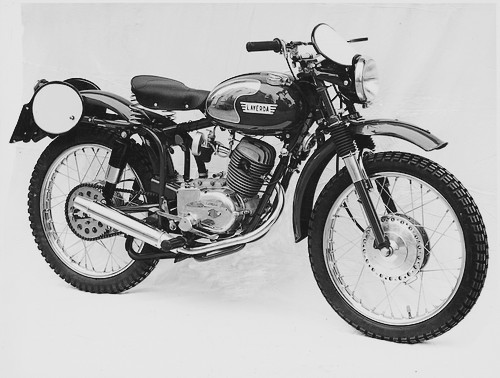
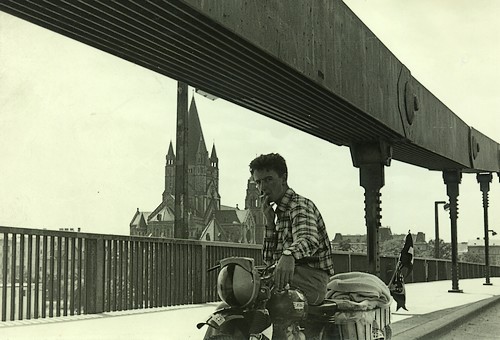
But the true start of the works Laverdas in off-road competition dates from 1956, when two 100cc bikes won the highly regarded Garmisch-Partenkirchen Six Days. From 1957 onwards, a large number of specially prepared Laverda machines appeared and, like the road bikes, their success was particularly noticed.
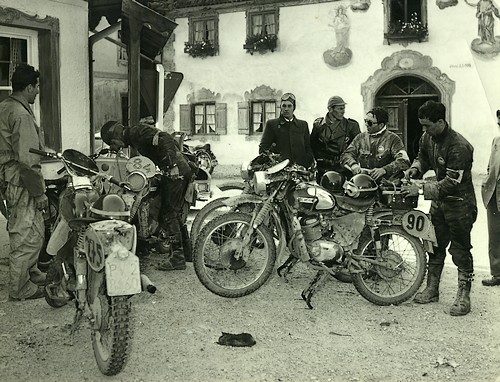
Many riders, notably locals from the Breganze region, cut their teeth on the Breganze machines in this kind of event — such as the Zappon brothers, Eligio Valerio, Giuliano Oro, and others.
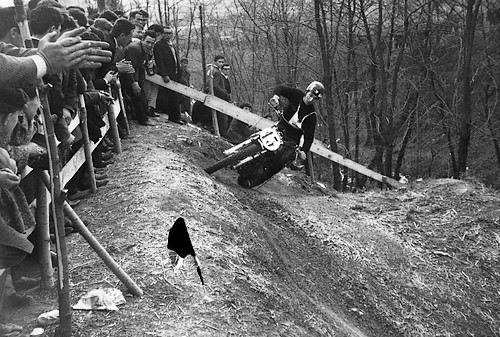
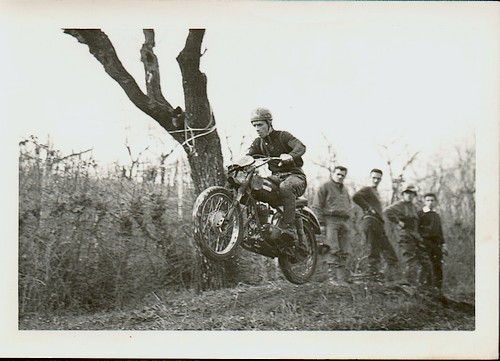
The off-road 100 Laverdas were used until 1962 and 1963, but by then the machine was truly ageing and needed replacing. In 1964 Massimo, son of Francesco Laverda — founder of the marque's motorcycle branch — took over from his father at the head of the company. He had new ideas, with a big-capacity bike in the background (which would become the 650/750cc), but in the meantime he was working on a new 125cc four-stroke model from which several versions would be drawn. Among these was an off-road model called the 125 Trail, producing 10 hp, built in 1965. A 150cc version was derived from it for the American market, but most of the models destined for the USA were modified by importer Jack McCormack, boss of American Eagle, and sold as the American Eagle Renegade 150 (the modifications involved fitting a polyester monocoque body, made and mounted directly in California).
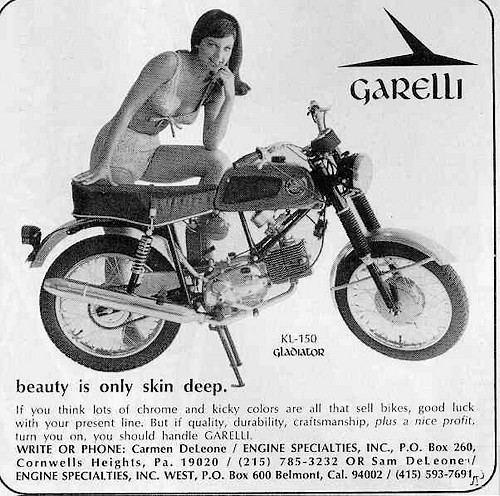
Note that Garelli produced an almost identical model bored out to 150cc, under Laverda licence, for the American market, called the Garelli KL 150 Gladiator.
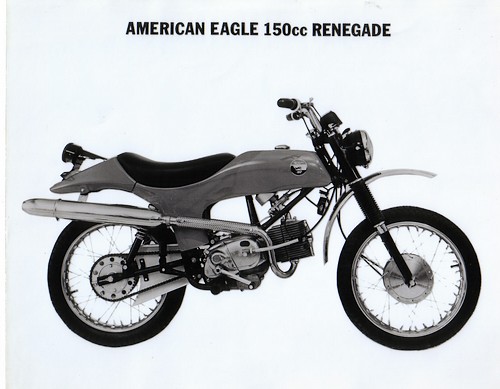
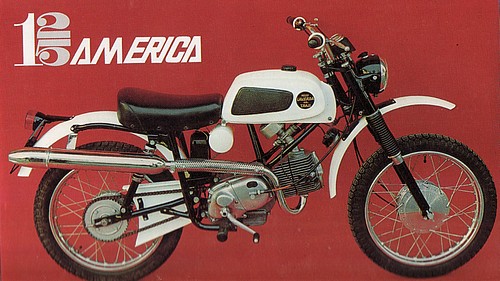
A draft advertisement for the 125 America. The name is in fact incorrect, as this bike was fitted with an engine bored out to 150cc
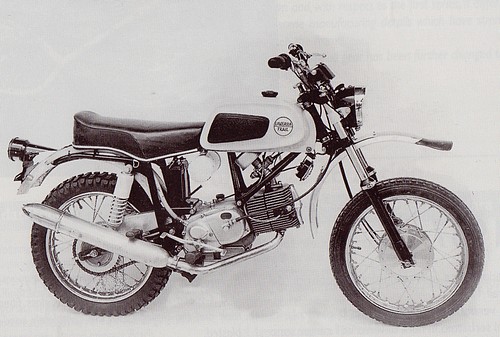
At the end of 1966 the factory launched the 125 Regolarità Corsa, which was in fact a racing derivative of the 125 Trail, with several levels of improvement including a power increase to 12 hp. This version was first aimed at the general public and appreciated in racing for its lightness and its performance with the Corsa parts (besides the extra 2 hp, the engine was distinctly livelier); then a radically evolved model, with a reinforced frame and a five-speed gearbox, was offered at the end of 1967.
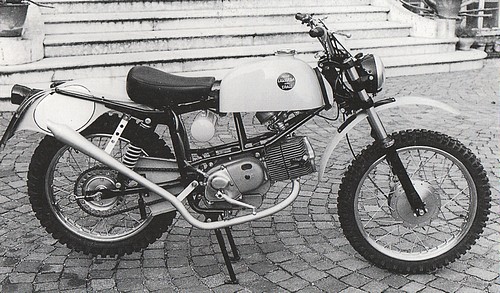
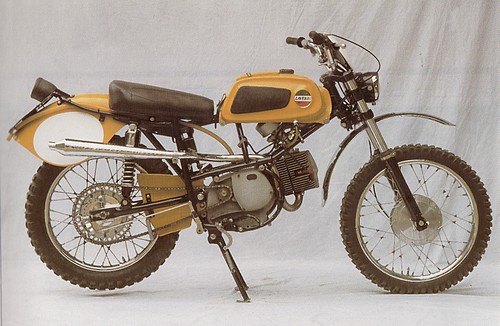
But 1966 and 1967 were also largely monopolised by the factory's 650cc project, which was of an entirely different scale… As a result, production of the 125 and 150 stopped at the end of 1967, and it would take until 1974 for a new off-road Laverda to be offered.
Part 2: The 1970s
In 1970 the factory studied a new off-road model using a 250cc two-stroke engine, the two-stroke being indispensable at the time to be competitive in off-road racing. But the constraints of the moment — production of the 750, the imminent 1000 triple project, and the prospect of building a new, larger factory — postponed the ambitions of building the 250 two-stroke.
The project was revived in 1974 in the form of the 250 Chott. Massimo Laverda wanted a top-of-the-range model, with rare or unheard-of technical refinements, advised in this by enduro and motocross champions. The choice was made to build a frame with a steering-head angle adjustable to suit the circuit (25, 27.5 or 30°) and to fit the engine and chassis with magnesium castings.
These sophistications were bold on such a machine, but above all they resulted in a very high price that greatly limited the Chott's success.
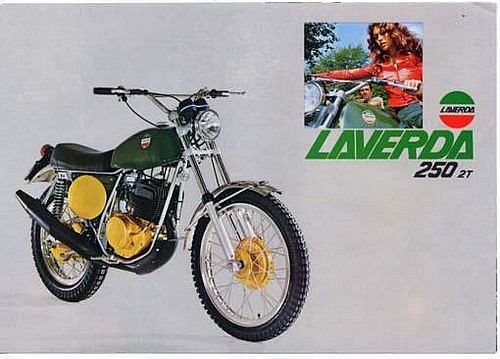
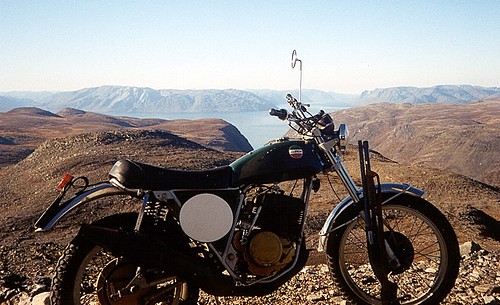
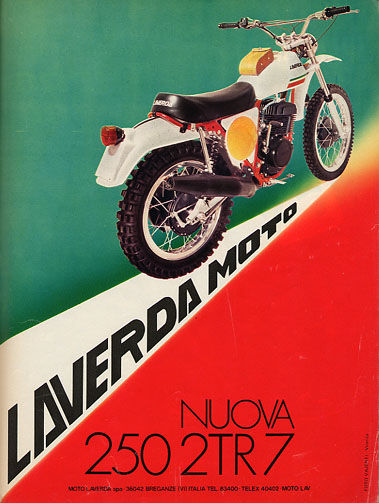
Despite its qualities, the Chott therefore needed to be replaced by a machine no doubt less sophisticated but also better suited to the usual customers for this kind of model. Laverda thus took the Chott as a basis and offered a stripped-down derivative version, without a rev counter, without magnesium parts, with plastic accessories (instead of metal). The 250 2TR ("R" for Regolarità) was born. Cheaper than the Chott, it was also lighter (99 kg).
But Laverda really wanted to step up a gear in off-road machine production and, through professional rider Italo Forni, who raced for Husqvarna, the factory struck a deal in 1976 with the Swedish marque to produce two models of 125 and 250cc from the end of 1977. Husqvarna supplied the engines and development advice, while Forni signed a contract to race the machine in competition and to help refine the bike. The works team was run by one of the Laverda factory's most famous collaborators, Giulio Franzan, a great off-road enthusiast. The two models were called the 125 and 250 HW.
Results began to come thanks to entries in the greatest international off-road events and, as a consequence, sales took off.
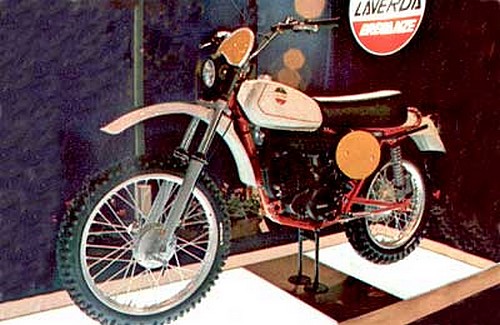
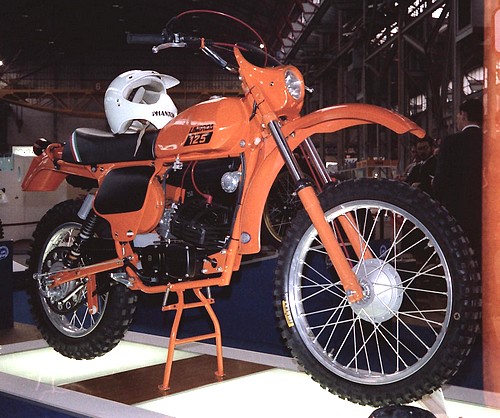
The Laverda-Husqvarnas were formidable machines and are still sought after today by fans of classic off-road events — a different way of riding, on a particularly effective machine.
Another off-road adventure involved Laverda. In 1977 the motorcycle firm BMW was looking to build a big-capacity trail model with long-travel suspension. It called on Laverda (which had become famous for the quality of the 250 HW's frames and chassis) to build the chassis around the Bavarian flat twin. A first prototype was built in 1977 with a 600cc engine, then a second prototype appeared in 1978 with an 800cc engine, which became the model that gave rise to the famous GS 80.
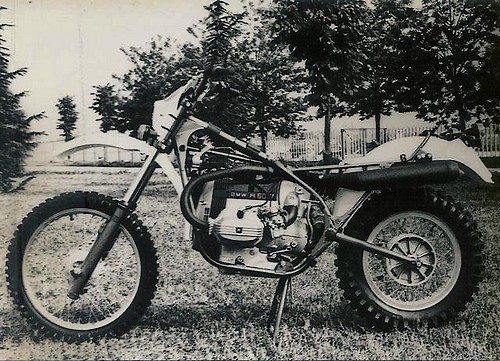
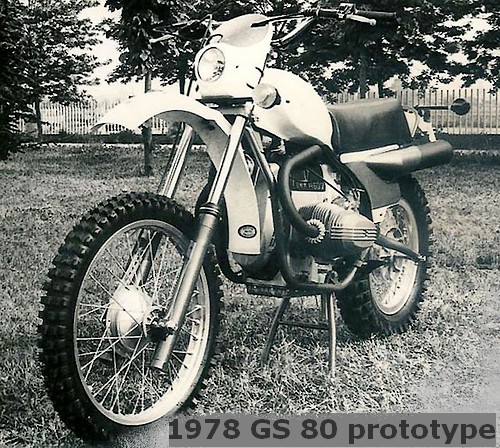
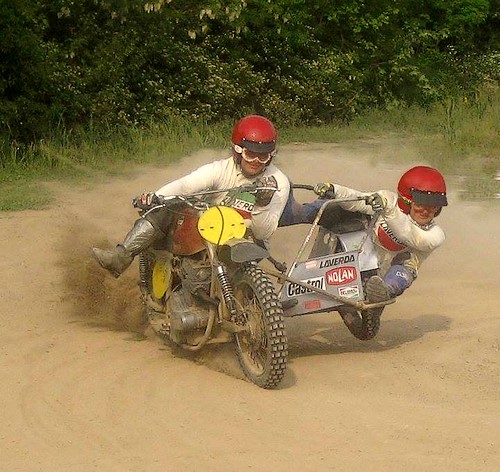
Finally, it is worth noting that in the early 1970s a few Laverda 750s were built as sidecar-cross outfits and enjoyed some success in that type of event.
Part 3: The 1980s
In the late 1970s and early 1980s the factory began to suffer financial problems and reoriented its production, modernising the 1000 triple, consolidating its 125cc range launched in 1977, and launching the 500, but abandoning other models such as the 1200, the 750 and its off-road models which, moreover, were becoming dated. The deal with Husqvarna had also lapsed, and the financial situation did not allow a new engine development process to be started.
This was without counting on the determination of collaborator Giulio Franzan, who had two passions — one for the 500cc, the other for off-road in general. That was enough for him to propose a trail model built around the 500cc twin engine, and in 1981 he obtained the go-ahead to build a prototype.
This 500 trail proved surprisingly well balanced, and the engine gave it plenty of character while coping quite well with fast off-road use. Although development deserved to be pursued, it was immediately felt that this could be an easily marketable model, and above all one well suited to its particular task.
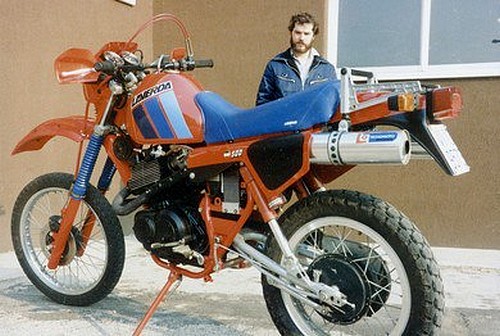
The 500 Trail prototype of 1981, the work of Giulio Franzan
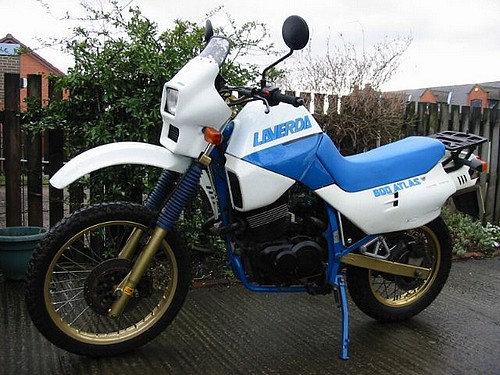
Still in a difficult financial context, the development and the decision to produce this bike took a little over three years. A first prototype (1001) was built and tested, then the definitive model was presented at the 1985 Milan show under the name Atlas 0R 600. The light, compact 500 engine was bored out to 600cc, given new camshafts and a twin-choke carburettor of automotive origin, a high-flow oil pump and an oil cooler, and an extra balancer shaft — resulting in 50 hp and 170 km/h top speed, plenty of torque, four valves per cylinder and very good reliability. The chassis was not left behind, with a rear cantilever christened Soft Ramble and excellent stability. All of which made it one of the best big-capacity trail bikes on the market, but it remained relatively expensive. After a good launch in the first year, sales stagnated then fell over the following three years, before the Atlas disappeared along with the marque…
There were three distinct series of Atlas: the first with white frames, then the second series with its blue frame, and finally the third series with the red frame, plus a few modifications to the oil coolers, the bodywork and the exhaust (now exiting on the left).
Note that in 1986 an Atlas 50cc two-stroke version aimed at younger riders was marketed.
Because of its qualities and its place among big-capacity trail bikes, the Atlas was unfairly a victim of the factory's financial troubles, which thus lost one of its most accomplished models.
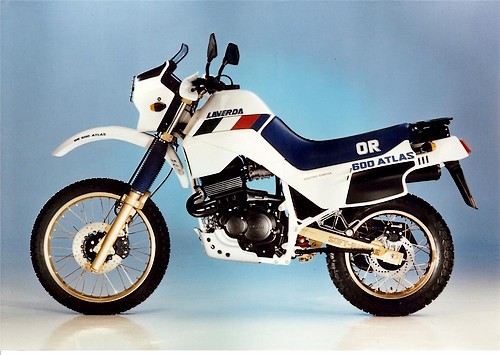
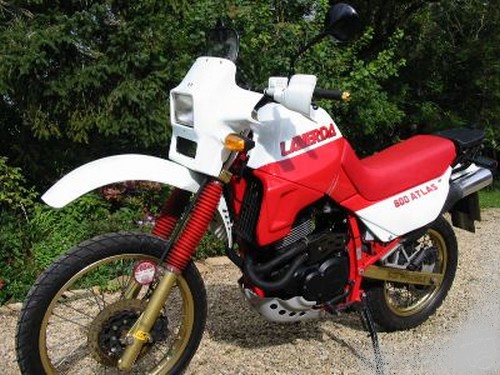
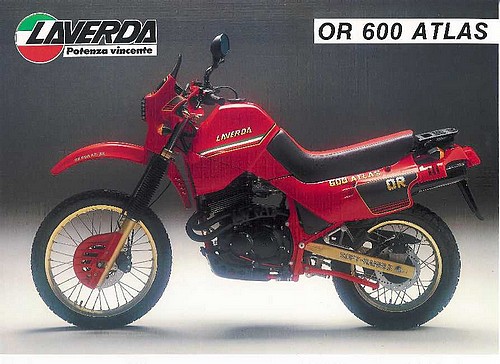
Advertisement for the third series; this livery was in fact never made available